
Is Your Online Sales Program Just Numbers on a Spreadsheet?
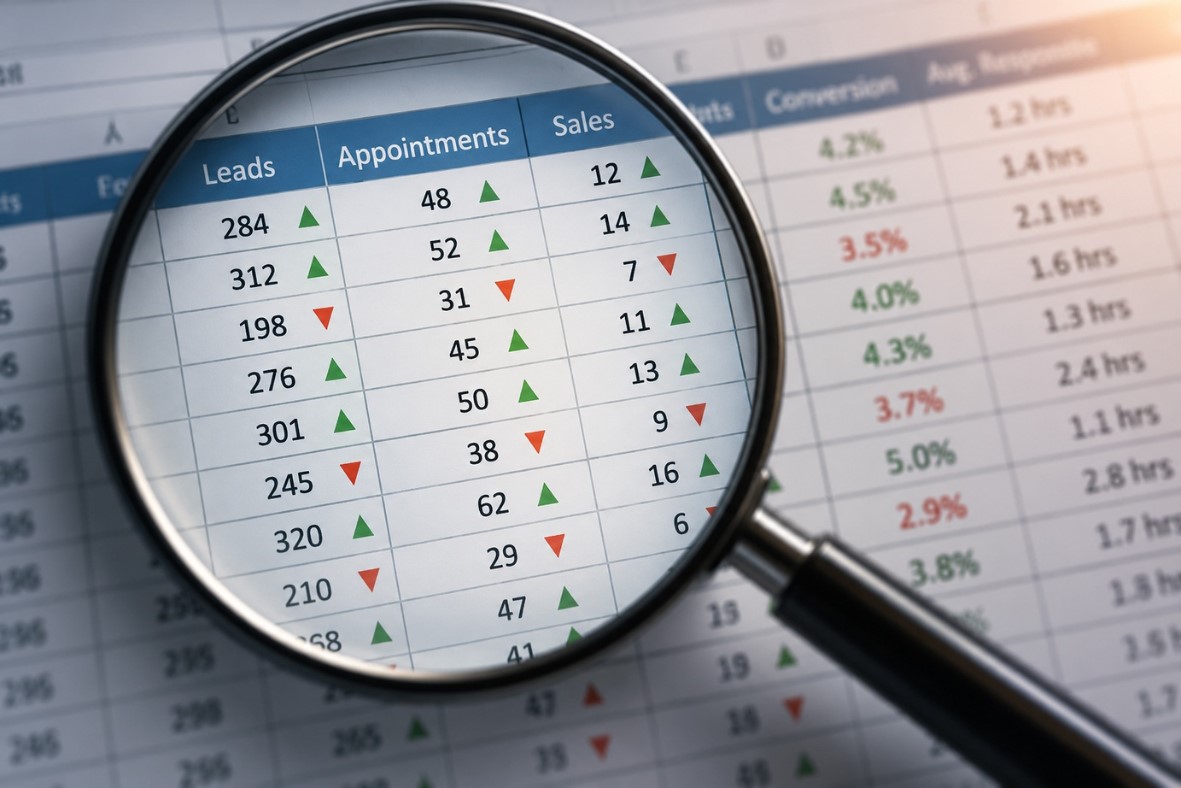 Over the years, I’ve worked with home builders who have invested significant time, money, and resources into developing their Online Sales Counselor (OSC) programs. They’ve hired talented people, invested in CRM systems, provided training, and established performance goals.
But somewhere along the way, something happens.
The OSC program stops being actively managed and starts being measured.
How many leads came in this month? How many appointments were set? How many sales came from online leads? What’s the conversion rate?
Don’t get me wrong. Those numbers matter. I’m a big believer in tracking performance and using data to make better decisions.
But here’s the question I wish more builders would ask:
“Are you actually managing your OSC program, or are you just reviewing the numbers on a spreadsheet?”
Measuring Performance Isn’t the Same as Managing Performance
It’s easy to look at a report and see that appointment numbers are down. It’s much harder to understand why.
Are your OSCs struggling to connect with buyers? Are they asking the right discovery questions? Are they having meaningful conversations or simply trying to get people to commit to appointments? Are they following up consistently? Are they getting the support they need from marketing and onsite sales? And most importantly in this day and age, are they getting blocked by technology? The buyer’s technology… (We’ll have to talk about that in another post!)
You won’t find all those answers in a spreadsheet.
A CRM can tell you how many calls an OSC made, but it doesn’t necessarily tell you whether those calls created meaningful connections with buyers.
It can show you how many emails were sent, but not whether those emails were personalized, relevant, or effective. It can track appointments, but it won’t tell you the whole story about the buyer’s experience or the quality of the handoff to onsite sales.
The numbers tell you what’s happening. They don’t always tell you why. And without understanding the why, how do you know what needs to change?
Who’s Actually Coaching Your OSCs?
One of the challenges I see repeatedly in homebuilding is that OSCs often report to sales leaders who have never actually worked in online sales. That doesn’t mean those leaders aren’t good at what they do. They’re often incredibly experienced sales professionals who understand the homebuilding business inside and out.
But online sales is different from onsite sales.
OSCs are managing hundreds of relationships at different stages of the buying journey. They’re communicating by phone, email, text, and sometimes video. They’re navigating CRMs, lead routing, automation, follow-up strategies, and constantly changing technology.
They’re also working at the intersection of marketing and sales, which means their success often depends on people and processes outside their direct control.
And unlike onsite sales agents, who often have managers with firsthand experience selling homes, OSCs don’t always have someone who truly understands the daily challenges of their role.
So who is listening to their calls? Who is reviewing their email conversations? Who is helping them improve their discovery skills, their follow-up strategies, or their ability to turn an inquiry into a meaningful relationship? If the answer is someone who is used to training onsite sales people, they may be missing some nuances along the way that makes online interactions different than in-person.
Who is advocating for the OSCs when something isn’t working between marketing, online sales, and onsite sales? If the answer is nobody, then you don’t really have an actively managed OSC program. You have an OSC program that’s being measured.
Training Isn’t a One-Time Event
I’ve spent years training and coaching OSCs, and one thing I know for certain is that training alone doesn’t create long-term success. Building the right habits is a large part of the equation.
You can introduce great new strategies, build thoughtful follow-up processes, and teach OSCs how to have better conversations with buyers. But what happens when the daily demands of the business take over?
Without ongoing coaching, reinforcement, and accountability, new ideas don’t always get implemented. Old habits creep back in. Technology changes. Buyer expectations evolve. And the program that was once moving forward begins to plateau.
That’s why ongoing development is so important.
Your OSCs need someone who is paying attention to more than their monthly numbers. Someone who recognizes their strengths, identifies opportunities for improvement, helps solve problems, and challenges them to keep growing.
Even your best-performing OSCs need that kind of leadership.
Your OSC Program Doesn’t Operate in a Vacuum
Here’s another thing that gets lost when we’re only looking at reports. An OSC program doesn’t succeed or fail based solely on what the OSC does. Marketing plays a role in the quality and quantity of leads coming in. Onsite sales plays a role in what happens after an appointment is set. Leadership plays a role in establishing expectations, providing resources, and making sure everyone is working toward the same goals.
Your OSC may be doing everything right, but if lead routing is inconsistent, follow-up systems aren’t working, or onsite agents aren’t communicating what happens with appointments, your results will suffer.
And those problems aren’t always visible in an OSC performance report.
Someone needs to be looking at the entire buyer journey, identifying the disconnects, and helping the different departments work together. That’s program management. And it’s very different from simply reviewing an OSC’s monthly production.
Are You Managing the Program or Just the Results?
I understand why this happens.
Sales leaders have a tremendous amount on their plates. They’re responsible for sales goals, onsite teams, inventory, pricing, forecasting, and a hundred other things that demand their attention.
It’s easy for the OSC program to become another report to review in the weekly sales meeting.
But if you’ve invested in building an in-house online sales team, shouldn’t you also be investing in the leadership needed to help that team succeed? That doesn’t necessarily mean hiring a full-time OSC manager. But it does mean making sure someone is responsible for the ongoing coaching, development, strategy, and accountability of the program.
Because the goal shouldn’t simply be to track how many appointments your OSCs set last month.
The goal should be to understand how your OSC program is performing, why it’s performing that way, and what you can do to make it better.
Your OSC program is more than numbers on a spreadsheet. It’s people, relationships, processes, and the first impression many buyers will have of your company.
And that deserves more than a monthly report.