
Is AI Starting to Ice Out Your Online Sales Counselors?
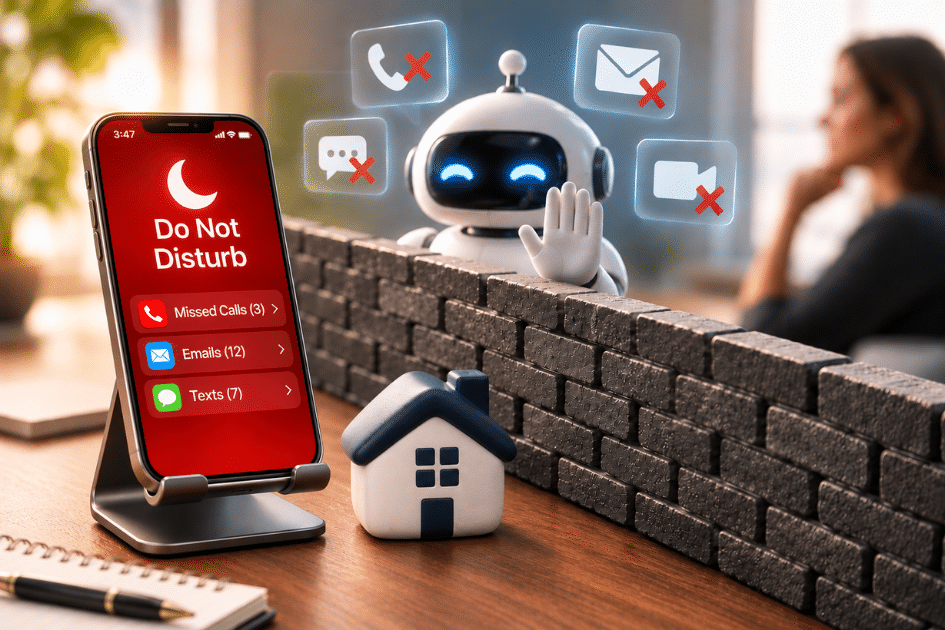
What Happens When Your OSC Has to Get Past a Buyer’s AI Before They Can Reach the Buyer?
I recently had a training session with an incredibly AI-savvy OSC. Before becoming an OSC, she actually trained Large Language Models (LLMs) for artificial intelligence. She understands the technology, embraces it, and has done a great job integrating AI into her daily work without losing the personal touch that’s so important in online sales.
But she recently shared an experience that really got me thinking about where we’re headed.
She called a prospective buyer and encountered an AI agent screening the call. Now, we’re getting used to calls being screened, and sometimes we’re asked to identify ourselves and explain why we’re calling before the call is connected. But this was different. The AI agent didn’t just screen her call. It redirected her to communicate with the prospect by email instead.
Think about that for a minute. The buyer had expressed interest in a new home, the OSC was following up on that inquiry, and the buyer’s AI essentially decided how that interaction was going to happen.
The OSC didn’t get to have a conversation. She was redirected to another communication channel by a piece of technology.
And I think we’re going to see a lot more of this.
AI Is Becoming the Gatekeeper
For years, we’ve talked about how difficult it can be to reach prospective homebuyers. People don’t answer calls from unfamiliar numbers. They ignore voicemails, delete emails, and have become increasingly selective about who gets their attention.
Now we’re adding another layer to that challenge. AI is beginning to make some of those decisions for them.
Instead of a buyer deciding whether to answer your call, their AI assistant may screen it, ask questions, take a message, or direct you somewhere else. And depending on how that technology is configured, the buyer may never actually hear the phone ring.
I’m not suggesting this technology is necessarily bad. Frankly, I understand why people want it. We’re all inundated with spam calls, unwanted solicitations, and endless marketing messages. Having something filter out the noise sounds pretty appealing.
But what happens when a legitimate follow-up from a company the buyer contacted gets caught in that filtering process?
For OSCs, that’s a pretty significant challenge. Especially when we’re trying to connect with someone who has already expressed an interest in buying a home.
And Now AI Is Changing What Buyers See in Their Email
Here’s another development I’ve been noticing in my own inbox.
For years, I’ve taught OSCs that some of the most valuable real estate in an email is the subject line and the first line of the message. Especially on a smartphone, where people are scrolling through their inboxes and deciding in seconds what deserves their attention.
That’s why I’ve always been so adamant about eliminating generic opening lines like “Just checking in” or “I wanted to follow up.”
Those words tell the buyer absolutely nothing about why they should open your email. They waste an opportunity to remind someone who you are, why you’re contacting them, and how you can help.
But lately, I’ve noticed something different happening in my own email. Outlook is showing AI-generated summaries of messages, rather than simply relying on the opening text of the email. And it isn’t just Outlook. Apple has introduced AI-generated email summaries that can appear directly in the inbox, replacing the traditional preview of the first few lines of a message.
So now we’re dealing with something entirely new. The sender doesn’t necessarily control the words a recipient sees beneath the subject line anymore. AI may be deciding what the email is about and presenting its own version before the buyer ever opens it.
What Happens to Your Carefully Written Email?
Imagine you’ve spent time crafting a thoughtful follow-up email to a prospective buyer. You’ve personalized it, referenced their interests, and included information you believe will help them take the next step.
But before the buyer sees any of that, their email application generates a short summary.
What if that summary makes your thoughtful message sound like just another generic sales follow-up? What if it highlights the wrong information? Or what if your email really is a generic follow-up, and the AI makes that painfully obvious?
We already know buyers have very little patience for irrelevant marketing messages. Now the technology they’re using may make it even easier to dismiss those messages without opening them.
And the buyer might not even realize they’re dismissing something that came from a real person who was trying to help them.
That’s what concerns me.
Personalization Is Becoming Even More Important
I’ve always believed that the best online sales communication is personal, relevant, and focused on the buyer. Not the builder. Not the OSC’s appointment goals. The buyer. And I think AI is going to make that approach even more important.
If your follow-up consists of generic emails that could have been sent to any prospect in your database, or more importantly from any builder in your area… what exactly is there for an AI system to recognize as meaningful or relevant?
But if your communication references something specific the buyer asked about, a community they were interested in, a concern they shared, or a question they wanted answered, there’s a much better chance that the purpose of your message will be clear.
That doesn’t guarantee an AI summary will get it right. But it gives the technology something more meaningful to work with. And it gives the buyer a reason to recognize your message as something connected to their home search, rather than just another sales email.
This is also why OSCs need to be thinking carefully about their entire communication strategy. If a phone call gets redirected to email, what happens next? Are you sending another generic message? Or are you adapting to the situation and finding a way to make that email worth reading?
We Need to Pay Attention to the Buyer’s Technology, Too
There’s been so much conversation in homebuilding about how AI can help our sales teams. We’re using it to write emails, automate processes, analyze conversations, manage leads, and improve efficiency.
And there are some fantastic applications for it. But while we’re busy figuring out how to use AI on our side of the sales process, we need to pay attention to what’s happening on the buyer’s side.
Their technology is changing, too.
We’re no longer just competing for attention in a crowded inbox or trying to get someone to answer an unfamiliar phone number. Increasingly, we’re going to be communicating through technology that’s evaluating, filtering, summarizing, and sometimes redirecting our attempts to connect.
I don’t think we have all the answers yet. This technology is evolving quickly, and we’re still learning how it will affect communication between businesses and consumers. But I do know this. We can’t continue relying on the same old generic follow-up strategies and expect them to become more effective as AI gets smarter.
The OSCs who succeed will be the ones who understand how these changes affect the buyer experience, adapt their communication strategies, and continue focusing on genuine human connections.
Because the goal isn’t simply to get past the AI. It’s to give the buyer a reason to want to hear from you in the first place.